Revision Techniques That Actually Work
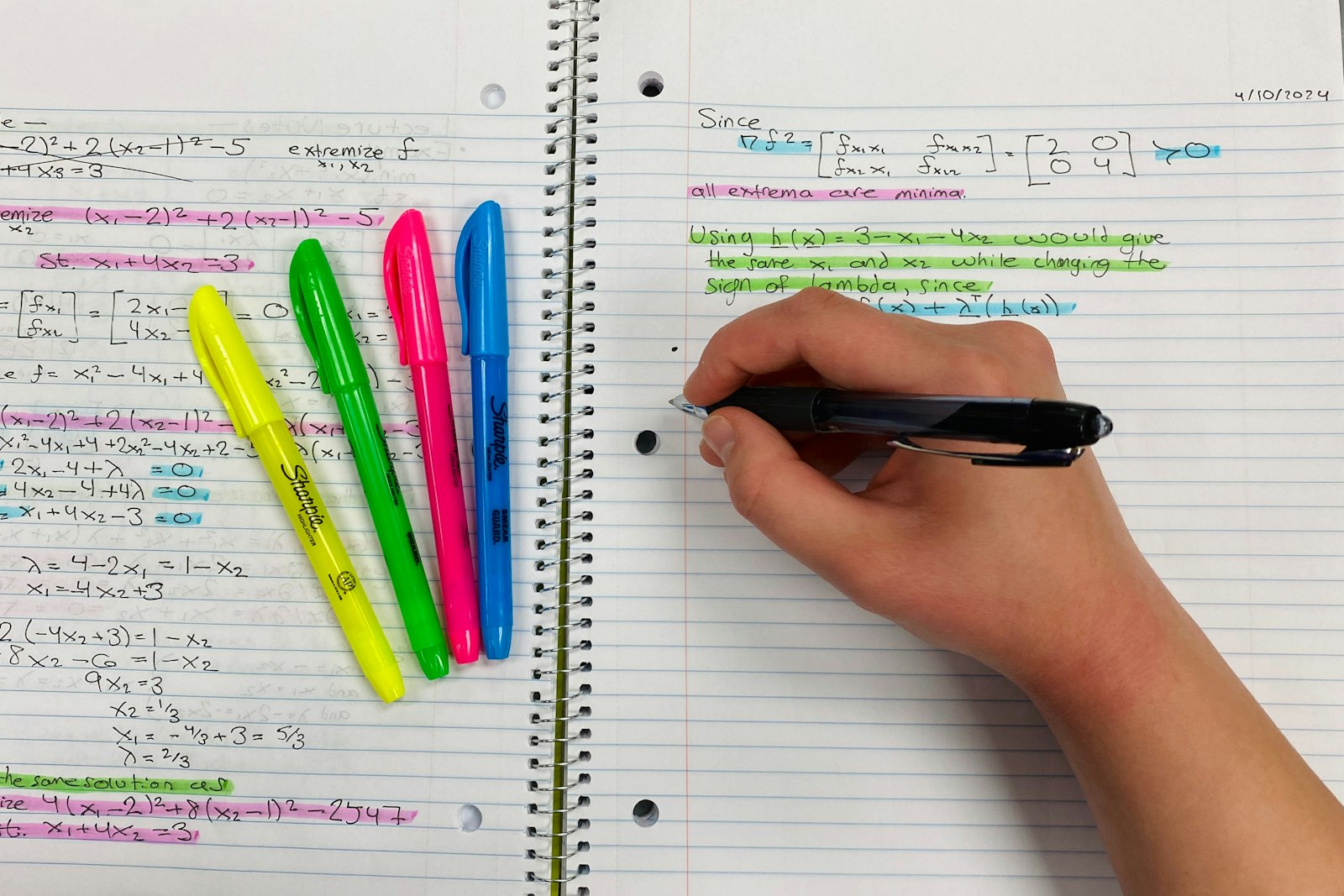
Rereading your notes feels productive, but it isn’t the best use of your time. A few evidence-based techniques help knowledge stick.
The short version
- A widely cited 2013 review by John Dunlosky and colleagues rated practice testing and distributed practice as the most useful learning techniques.
- Highlighting, rereading and summarising were rated as low-utility techniques in the same review.
- Test yourself without looking at your notes, then check what you got wrong.
- Spread revision over days and weeks instead of cramming the night before.
- Mixing different types of problems, known as interleaving, can help in subjects like maths.
Many students revise by rereading notes and highlighting textbooks. It feels productive, because the material looks familiar, but familiarity isn’t the same as being able to recall something in an exam. Research points to better ways to use your time.
What the research says
In 2013, psychologist John Dunlosky and colleagues published a widely cited review of ten common learning techniques in the journal Psychological Science in the Public Interest. They rated how useful each technique was across different learners, materials and tests.
- High utility: practice testing and distributed practice.
- Moderate utility: techniques such as interleaved practice, elaborative interrogation and self-explanation.
- Low utility: highlighting, rereading and summarising, among others.
That doesn’t mean low-utility techniques are useless, only that the evidence for them is weaker. The two top-rated techniques are simple to use.
Practice testing
Practice testing means trying to recall information without looking at it. Retrieving an answer strengthens the memory far more than reading it again.
Ways to do it:
- Past papers under timed conditions.
- Flashcards: answer before you flip, and keep the ones you get wrong in rotation.
- Blank page recall: write down everything you remember about a topic, then check your notes for gaps.
- Teach it: explain a topic out loud to someone else, or to an empty room.
Always check your answers. Correcting mistakes is where much of the learning happens.
Distributed practice
Distributed practice, or spacing, means spreading revision of a topic over several sessions, rather than cramming it into one.
- Make a revision timetable that brings each topic back several times.
- Start earlier than you think you need to. Spacing only works if there’s time to space.
- Short, frequent sessions beat a single long one on the same topic.
Study tip
Combine the two techniques: put a quick quiz at the start of each session on topics from earlier in the week. You’ll test yourself and space your practice at the same time.
Interleaving and explaining
- Interleaving means mixing different types of problems in one session instead of practising one type at a time. It’s especially useful in maths and science, where part of the skill is recognising which method to use.
- Elaborative interrogation and self-explanation involve asking yourself why something is true, or explaining the steps in a solution in your own words.
Look after the basics
Good technique can’t make up for exhaustion. Sleep, regular meals and breaks help you concentrate and remember. If exam pressure is building, our guide to handling exam stress has practical steps and places to get support.
Putting it into a plan
- List your topics and rate your confidence in each.
- Schedule each topic more than once, with gaps in between.
- Start every session with recall, then use your notes to fill gaps.
- Finish with past papers in exam conditions as exams approach.
For coursework rather than exams, our guide to referencing and avoiding plagiarism covers the other big study skill at university.
Questions students ask
Is highlighting a waste of time?
Not entirely, but on its own it doesn’t do much for learning. Use it to mark what to test yourself on later, not as the revision itself.
How far apart should I space revision?
There’s no single perfect gap. A practical approach is to revisit a topic a day or two after first learning it, then again a week later, and again before the exam.
Do flashcards work?
They can, because they make you recall answers. They work best when you try to answer before flipping the card and keep reviewing the cards you get wrong.
How long should a revision session be?
Shorter, focused sessions with breaks usually work better than marathon sessions. Find a rhythm you can keep up, and protect your sleep.
This guide is general information for students in the UK. Dates, fees and rules change, so always check the latest details with UCAS, GOV.UK, Student Finance England or your university or college before making decisions.